Changing Track
Group exhibition
Samir Laghouati-Rashwan, Randa Maroufi, Rayane Mcirdi, Valentin Noujaïm, Sara Ouhaddou
P21 Gallery, London
25 February—25 March 2023
Group exhibition
Samir Laghouati-Rashwan, Randa Maroufi, Rayane Mcirdi, Valentin Noujaïm, Sara Ouhaddou
P21 Gallery, London
25 February—25 March 2023
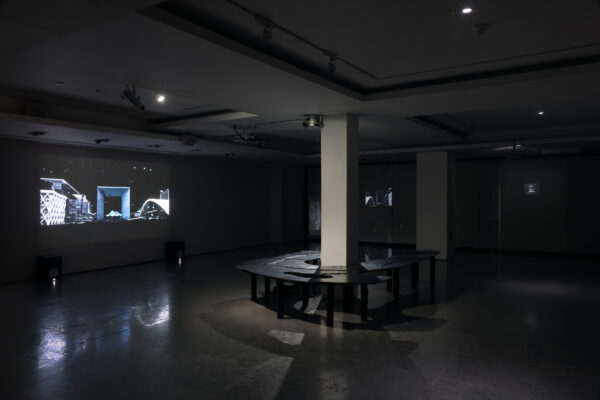
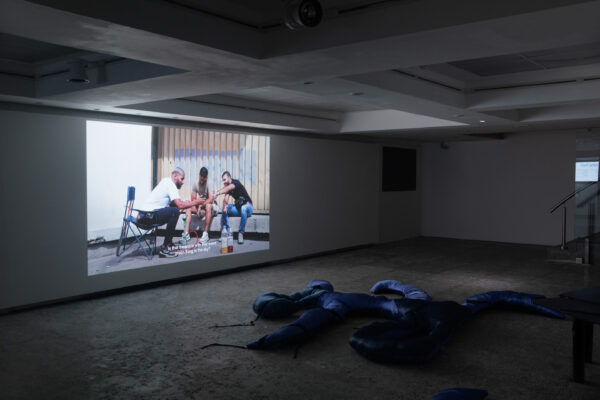
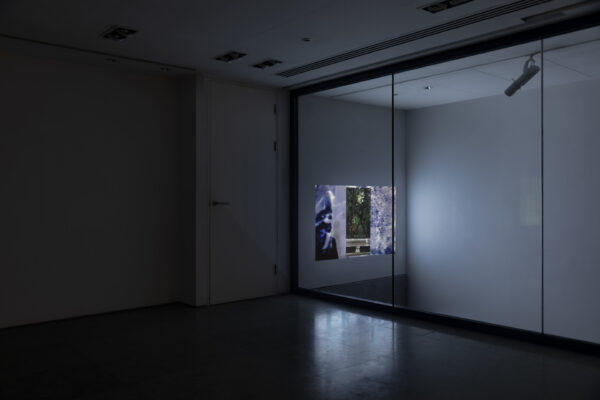
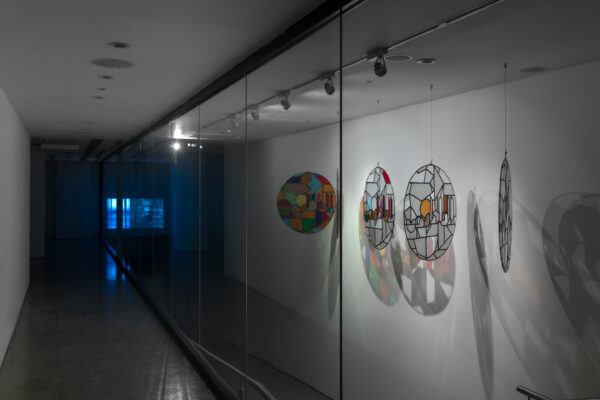
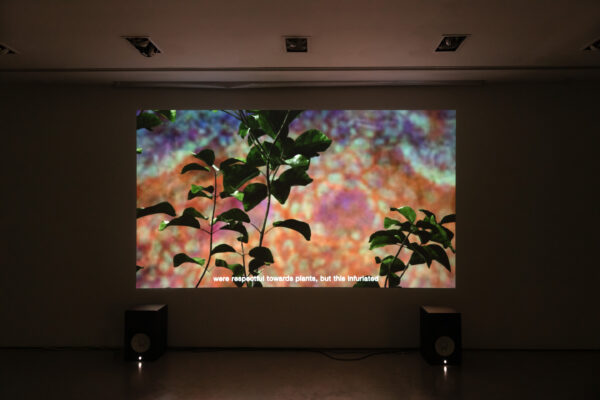
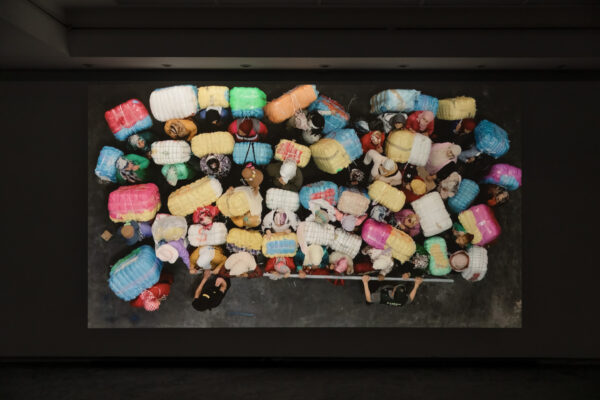
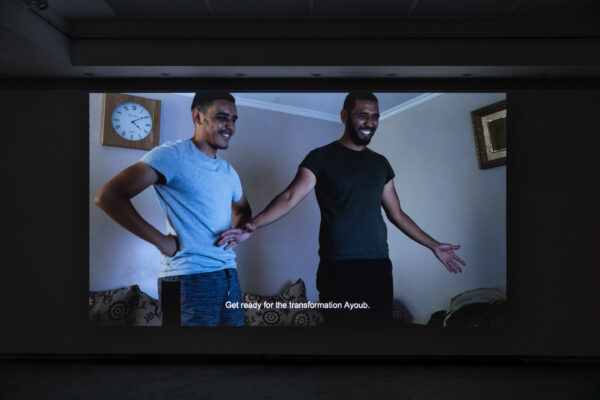
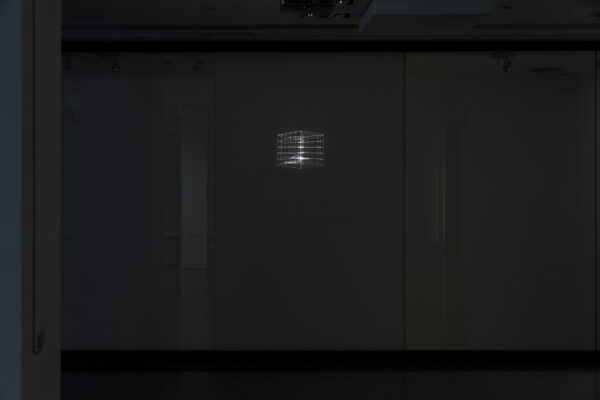
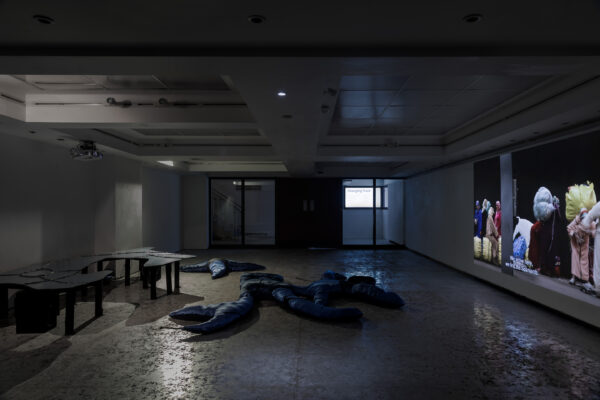
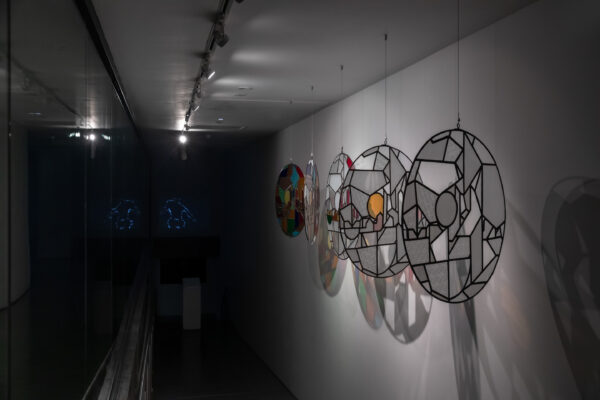
Changing Track is a group exhibition presenting works by Samir Laghouati-Rashwan, Randa Maroufi, Rayane Mcirdi, Valentin Noujaïm, and Sara Ouhaddou. Exploring the notions of daydream, change and im/mobility, the show features video and stained glass works, two mediums that function through an interplay between light and surface; traversing, transformed, absorbed or bouncing back, the rays draw straight or deviated trajectories. Dealing with the construction of self, contemporary social realities, and the intertwining of history, the works on display offer singular perspectives on the unexpected connections between hindrance and movement, constraint and transformation, preservation and vanishing lines—connections that elaborate the layering of spaces in time, and of time in space.
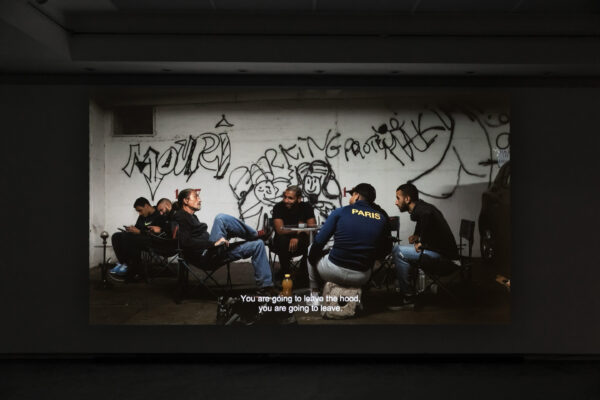
Using French writer Michel Butor’s novel La Modification [Changing Track, 1957] as a conceptual backbone to reflect on the articulation of space and time in relation to processes of alteration, Changing Track seeks to bring together a variety of contemporary approaches. Some artists are interested in the histories of artifacts, goods, and practices that have passed (and transformed) through different contexts: Sara Ouhaddou’s stained glass work Al Kalima shows how total transformation is the byproduct of a slow gradation proceeding throughout a series of close (or infinitesimally different) states; Samir Laghouati-Raswhan’s film Quinquina Diaspora seeks to strip the historical gaze of its anthropomorphic filter to better reveal the memorial load of objects, thus linking materiality and immateriality. Other works question what defines and expresses a given space. It can be de jure an enclave, as in Bab Sebta by Randa Maroufi, where the characters evolve by the quasi-choreographed operation of a movement whose loops seem to draw the fence. It can be an unsuspected place, swallowed up in time and space (that of the undergrounds of La Défense), but whose ghost returns to haunt today’s area, via a testimonial voice, in Défense : Volume 1 by Valentin Noujaïm. Or it can be, in Le Croissant de feu by Rayane Mcirdi, a space that has lost its emblem and is superimposed by a space to dream, itself blending possible elsewheres; a spatiotemporal stack drawing an interzone where desire for freedom and reality check lightly brush.

https://p21.gallery/exhibitions/changing-track
Graphic design: Walid Bouchouchi / Studio Akakir
Set design: Leïla Arenou
© Jack Elliot Edwards
Kindly supported by Council England and Fluxus Art Projects